Mejorar el bienestar de los artesanos que trabajan con bambú: Desde la educación financiera y el capital social hasta el espíritu emprendedor y el rendimiento empresarial
Improving the welfare of bamboo woven craftsman: Starting from financial literacy and social capital, through to entrepreneurial spirit and business performance
Made Ary Meitriana
Pendidikan Ganesha University (Indonesia)
https://orcid.org/0000-0002-0870-7233
Ni Nyoman Yuliarmi
Udayana University (Indonesia)
https://orcid.org/0000-0002-4810-1682
Anak Agung Istri Ngurah Marhaeni
Udayana University (Indonesia)
https://orcid.org/0000-0002-0372-769X
anakagungistringurahmarhaeni@gmail.com
I Nyoman Mahendra Yasa
Udayana University (Indonesia)
https://orcid.org/0009-0000-3810-5041
RESUMEN
El objetivo de este estudio es investigar el impacto de la educación financiera y el capital social en el bienestar de los artesanos que se dedican al tejido de bambú, mediado por el rendimiento empresarial y el espíritu emprendedor. El estudio incluyó a 209 artesanos del tejido de bambú de la aldea de Tigawasa que desempeñan activamente sus funciones operativas. Mediante la aplicación de la fórmula de Slovin, se obtuvo una muestra de 140 artesanos. Recopilamos datos mediante diversos métodos, entre ellos la observación y entrevistas estructuradas y en profundidad. Utilizamos el método SEM-PLS para el análisis de los datos. Las conclusiones del estudio indican que el bienestar de los tejedores de bambú se ve influido por la educación financiera, el capital social, el espíritu emprendedor y el rendimiento empresarial. Curiosamente, el estudio reveló que su espíritu emprendedor no influía en el impacto de los conocimientos financieros y el capital social en el bienestar de los artesanos del tejido de bambú. Además, el impacto de los conocimientos financieros, el capital social y el espíritu emprendedor en el bienestar de los artesanos del bambú no está mediado por el rendimiento empresarial. Por lo general, un profundo conocimiento de las finanzas, una amplia red de contactos y el impulso por el éxito empresarial contribuyen a la prosperidad de los artesanos del bambú.
PALABRAS CLAVE
Bienestar de los artesanos; la educación financiera; capital social y rendimiento empresarial.
ABSTRACT
This study aims to investigate the impact of financial literacy and social capital on the welfare of bamboo woven artisans, as mediated by business performance and entrepreneurial spirit. The study included 209 bamboo weaving artisans from Tigawasa Village actively performing their operational duties. Through the application of the Slovin formula, a sample size of 140 artisans was acquired. We collected data through various methods, including observation, structured, and in-depth interviews. We utilized the SEM-PLS method for data analysis. The study’s findings indicate that the welfare of bamboo weavers is influenced by financial literacy, social capital, entrepreneurial spirit, and business performance. Interestingly, the study revealed that their entrepreneurial spirit did not influence the impact of financial literacy and social capital on the welfare of bamboo-woven artisans. In addition, the impact of financial literacy, social capital, and entrepreneurial spirit on the welfare of bamboo artisans is not mediated by business performance. Typically, a strong understanding of finances, a vast network of connections, and a drive for business success contribute to the prosperity of bamboo artisans.
KEYWORDS
The welfare of craftsmen; financial literacy; social capital and business performance.
Clasificación JEL: G53, I31, L26.
MSC2010: 91G05.
1. INTRODUCTION
The bamboo industry has now played an important role in driving the economy of rural communities. This sector is typically divided into micro, small, and medium enterprises (MSMEs) that possess the ability to quickly adjust to the business landscape (Soriano & Dobon, 2009) and demonstrate greater resilience compared to more giant corporations (Pieter & Utomo, 2023). Additionally, it has been noted that bamboo MSMEs have the potential to contribute to the revival of the creative economy in the post-COVID-19 era (Utomo et al., 2021). Thus, these MSMEs can employ many individuals in rural regions, second only to the agricultural sector.
The bamboo industry is known for its high-quality products, including various handicrafts. That is because handicraft products are highly sought after in the global market due to their economic value. In 2023, according to data from trademap.org, this product is projected to make a significant contribution of US$ 603,956 million to Indonesia. As per the statement by Alexandra Arri Cahyani, the Director of Miscellaneous Industries and Chemical, Clothing and Crafts Industries at the Indonesian Ministry of Industry, Indonesia currently holds a market share of 1.25 % in the global craft product market. In addition to their economic significance, bamboo handicraft products possess artistic and cultural value, as noted by various scholars (Yeny et al., 2015; Li et al., 2022). Thus, bamboo crafts can be a practical approach to addressing poverty (Li et al., 2022).
However, the great demand for bamboo crafts is sometimes accompanied by a different level of well-being for the artisans. There is a concern regarding the welfare of many artisans, resulting in their placement in the lowest socio-economic stratum of society (Dalal et al., 2024). This phenomenon can be attributed to various factors, including restricted educational opportunities, limited access to essential services like healthcare and employment, as well as the presence of poverty and unfavorable living conditions (Irwansyah, 2023; Rizki et al., 2024). This situation indicates that many artisans belong to the lower socio-economic classes in society (Dalal et al., 2024).
Bamboo artisans also encounter this condition in Tigawasa Village, Buleleng, Indonesia. Tigawasa Village is a renowned village in the Buleleng Region known for its exceptional bamboo woven crafts. In this village, skilled artisans create a wide range of bamboo craft products, including “keben,” bags, baskets, and more. The craft products from this village have not only met local needs but have also gained popularity in the international market, contributing to the community’s economic growth. Nevertheless, the development of bamboo woven artisans confronted challenges during the COVID-19 pandemic, including a decline in sales figures, challenges with raw materials, and a decrease in production, capital, and distribution delays. The worst part is that the performance of bamboo craft businesses is deteriorating at an accelerated rate, resulting in significant layoffs of employees in this industry. One issue encountered by artisans specializing in bamboo weaving is the need to enhance their competitiveness in response to the growing economy, technological advancements, and access to information. That is crucial for improving the livelihoods of these craftsmen; given the circumstances that bamboo artisans in Tigawasa Village face, it is crucial to integrate financial literacy, the role of social capital, and entrepreneurial spirit in this research to enhance business performance and promote prosperity, as well as to ensure the sustainable development and survival of the business (Aribawa, 2016).
Theoretically, numerous studies have demonstrated a robust connection between financial literacy, social capital, and entrepreneurial mentality on the performance and welfare of MSMEs. Financial literacy is thought to enhance abilities in managing finances, planning business activities, and making wise investment choices (Culebro-Martínez et al., 2024). At the same time, social capital, manifested as networks of trust, norms, and social connections, aids in accessing resources, information, and support essential for addressing capital and market limitations (Czech et al., 2024). Moreover, the entrepreneurial mindset, which includes innovation, initiative, and willingness to take risks, is regarded as a crucial factor in generating value, unlocking new market possibilities, and improving business competitiveness (Karimi & Walter, 2021). This theoretical framework establishes the basis for the hypothesis that enhancements in these three factors will proportionally enhance business performance and, in the end, the well-being of artisans.
Nonetheless, the literature review uncovered a research gap in applying these broad theories to the specific context of distinct cultural and community-oriented craft industries, like bamboo artisans in rural Indonesia. Multiple studies indicate that in traditional societies, the reasons for well-being and its indicators frequently go beyond solely material-economic factors and are more closely associated with cultural values, tradition conservation, and subjective happiness. Consequently, it is likely that the linear relationships proposed by conventional theories may not be entirely accurate or may be influenced by specific contextual elements, such as the need to maintain culture, shared community value systems, or the effects of enduring socioeconomic challenges. This research seeks to assess the relevance of these theories and explore the intricate and particular dynamics that influence the well-being of bamboo artisans
Of course, financial literacy is closely related to welfare. That is supported by the research conducted by Asante (2018), which states that financial literacy and business performance are essential in improving the welfare of MSME actors. Financial literacy is obtained from education through knowledge that provides a person’s theoretical abilities. In contrast, education in training or skills is intended to provide practical abilities so that everyone in entrepreneurship can be carried out effectively and efficiently (Henrekson, 2005; Neumann, 2021; Tamvada, 2010). In addition, Thomas and Subhashree (2020) stated that financial knowledge and its development, accompanied by social skills, will increase the entrepreneurial spirit. However, several studies state that qualified financial literacy directly affects welfare, so mediation of business performance is rejected (Afkhami Mostafavi et al., 2023; Lin et al., 2006). Business performance is not the main goal of achieving welfare. Business performance is not just about achieving financial numbers but also includes overall business performance (Wu et al., 2020).
Research conducted by Asante (2018) highlights the significance of financial literacy and business performance in enhancing the welfare of MSME players. Education plays a crucial role in developing financial literacy. It provides individuals with the theoretical knowledge needed to understand financial concepts. Education also focuses on practical skills and training, enabling individuals to effectively and efficiently engage in entrepreneurship (Henrekson, 2005; Neumann, 2021; Tamvada, 2010). In addition, Thomas and Subhashree (2020) have highlighted the correlation between financial knowledge, social skills, and the improvement of entrepreneurial spirit.
Nevertheless, numerous academic studies have indicated that a strong understanding of financial literacy can significantly impact overall well-being, leading to the dismissal of the notion that business performance serves as a mediator (Afkhami Mostafavi et al., 2023; Lin et al., 2006). Business performance is one of many goals for achieving prosperity. Business performance encompasses more than just financial figures; it encompasses the business’s overall performance (Wu et al., 2020).
Given the conditions outlined, this research puts forth several hypotheses:
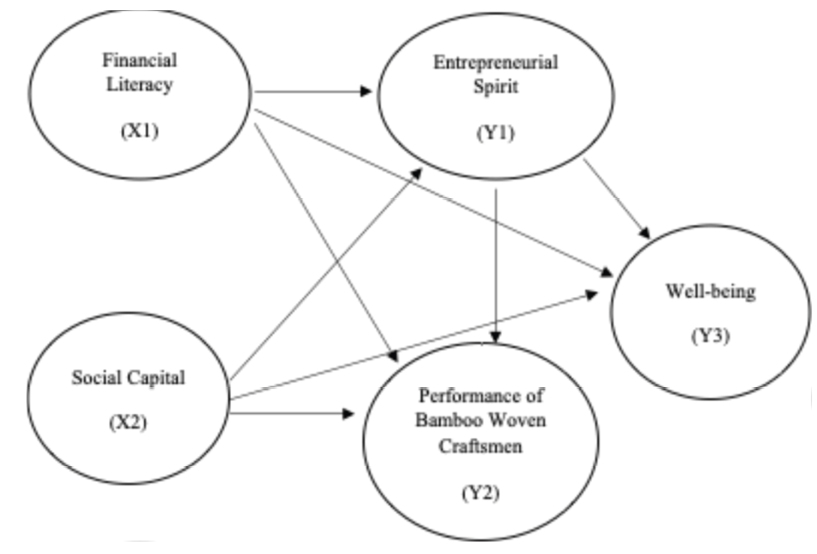
H1: Financial Literacy and Social Capital Influence the Entrepreneurial Spirit
H2: Financial Literacy, Social Capital, and Entrepreneurial Spirit Influence Business Performance
H3: Financial Literacy, Social Capital, Entrepreneurial Spirit and Business Performance Influence the Welfare of Bamboo Weaving Craftsmen
H4: Entrepreneurial Spirit Mediates the Influence of Financial Literacy and Social Capital on the Performance of Bamboo Weaving Craftsmen
H5: Entrepreneurial Spirit Mediates Between the Influence of Financial Literacy and Social Capital on the Welfare of Bamboo Weaving Craftsmen
H6: Business Performance Mediates the Influence of Financial Literacy, Social Capital, and Entrepreneurial Spirit on the Welfare of Bamboo Weaving Craftsmen
Figure 1 shows the research conceptual framework, which is based on theoretical studies, previous research results, and modified models.
Figure 1. Research concept framework. Source: Authors’ personal elaborations
2. METHODS
This study employs a quantitative methodology, relying on a robust and dependable theory generalization. The quantitative approach is a fundamental aspect of positivism, involving testing data and theories through hypothesis testing (Gomm, 2018). This study aimed to examine the impact of various factors on the welfare of bamboo artisans in Tigawasa village, Buleleng-Bali, Indonesia. Specifically, the research investigated the relationship between Financial Literacy, Social Capital, entrepreneurial spirit, and business performance.
The data utilized is sourced from the entire community of bamboo weavers in Tigawasa Village, Banjar District, Buleleng Regency. These craftsmen were recorded in the Tigawasa village data 2023, with 209 individuals. The researchers utilized the Slovin sampling technique to enhance the representativeness of the population (Ismail et al., 2022). According to Ismail et al. (2022), this method is commonly employed in academic surveys, mainly when dealing with a sizable population, and researchers face constraints in reaching everyone. The research sample consisted of 140 respondents, determined using the Slovin technique. This technique involves selecting 5 % of the total population, which in this case was 209 artisans. Thus, the study’s sample size is limited to 140 respondents, which is considered sufficient to represent the bamboo artisans in Tigawasa village in 2023 accurately.
This study employs a survey method through the use of a questionnaire. The variables utilized in this study were assessed using a concise five-point Likert scale. We utilize a Likert scale from 1, representing “strongly disagree,” to 5, indicating “strongly agree,” for measurement purposes. The indicators used in the variables in this research are derived from various previous studies. The information on financial literacy was sourced from a study by Lusardi and Mitchell (2010). This study explores interest rates, inflation, and risk diversification.
On the other hand, the material on social capital is based on Fukuyama (2001) perspective, which identifies three types of social capital: social bonding, bridging, and linking. The material on entrepreneurial spirit was derived from research conducted by Lumpkin & Dess (1996). This study categorizes the business performance of bamboo-woven artisans into three main areas: productivity, timeliness, and quality. The items in the business performance measure were derived from Munizu’s (2010) research.
Surveys were given to 140 participants to gather information about their businesses, including how long they have been established and their market objectives (local, national, and international). Afterward, the data is processed and analyzed using the Smart PLS software. Subsequently, resampling (bootstrapping) is implemented, which involves the following procedures: (1) the development of a measurement model (outer model), (2) the development of a structural model (inner model), (3) the generation of a path diagram, (4) the transformation of the path diagram into equations for the outer and inner models, (5) parameter estimation, (6) model suitability testing, and (7) hypothesis testing and discussion.
3. RESULTS
Data was collected from 140 respondents who responded to the questionnaire questions. The majority (61 %) of the participants focused on the local market, while the remaining respondents (39 %) focused on national and international markets. This distribution is illustrated in Table 1.
|
Length of Business |
Market Concentration |
|||||
|---|---|---|---|---|---|---|
|
Local |
National and International |
Total |
||||
|
Number (respondent) |
Percentage (%) |
Number (respondent) |
Percentage (%) |
Number (respondent) |
Percentage (%) |
|
|
1-5 years |
38 |
27 |
30 |
21 |
68 |
48 |
|
6 – 10 years |
36 |
26 |
15 |
11 |
51 |
37 |
|
≥ 10 years |
11 |
8 |
10 |
7 |
21 |
15 |
|
Total |
85 |
61 |
55 |
39 |
140 |
100 |
Around 68 (48 %) of the participants have recently established their businesses within the past 1-5 years. Following closely, approximately 51 respondents (37 %) have been in the business for 6-10 years, while a smaller group of 21 individuals (15 %) have been running their businesses for over ten years. The study’s findings revealed that most participants were driven to pursue entrepreneurship due to their drive for independence and flexibility in managing their time.
The conversion of validity can be observed through the correlation between indicator scores and loading factor variables. A score above 0.50 indicates that the model is considered good and that all constructs used in the research have sufficient discriminant validity [30]. All constructs should have composite reliability values greater than 0.7 to meet the required construct reliability [30]. The measurements indicate that all indicators are appropriate and reliable for analysis in the structural model (inner model). The validity and reliability of the questionnaire are illustrated in Table 2.
Table 2. Validity and Reliability Test.
|
Variables/Indicator |
Outer Loading |
Average Variance Extracted (AVE) |
Composite Reliability |
Cronbach’s Alpha |
Explanation |
|---|---|---|---|---|---|
|
Financial Literacy (X1) |
Valid and Reliable |
||||
|
X1.1 |
0.890 |
0.746 |
0.898 |
0.830 |
|
|
X1.2 |
0.804 |
||||
|
X1.4 |
0.895 |
||||
|
Social Capital (X2) |
|||||
|
X2.1 |
0.781 |
Valid and Reliable |
|||
|
X2.2 |
0.876 |
0.673 |
0.848 |
0.733 |
|
|
X2.3 |
0.801 |
||||
|
Entrepreneurial Spirit (Y1) |
Valid and Reliable |
||||
|
Y1.1 |
0.860 |
||||
|
Y1.2 |
0.741 |
0.651 |
0.848 |
0.733 |
|
|
Y1.3 |
0.815 |
||||
|
Business Performance (Y2) |
Valid and Reliable |
||||
|
Y2.1 |
0.789 |
||||
|
Y2.2 |
0.774 |
0.635 |
0.839 |
0.713 |
|
|
Y2.3 |
0.827 |
||||
|
Well-being (Y3) |
Valid and Reliable |
||||
|
Y3.2 |
0.749 |
||||
|
Y3.3 |
0.792 |
0.676 |
0.892 |
0.839 |
|
|
Y3.4 |
0.897 |
||||
|
Y3.5 |
0.841 |
The results of reliability testing show that all constructs have a composite reliability coefficient of more than 0.70. Thus, all measurement models used in this research are highly reliable. So, further analysis can be carried out by checking the model’s goodness of fit and evaluating the inner model.
Model fit was calculated using the goodness of fit index. The goodness of fit (GoF) index is defined as the geometric mean or root of the average communality and the average R2 for all endogenous constructs. The GoF value range is between 0–1; 0–0.25 is categorized as small or inadequate, 0.25–0.36 is moderate, and more than 0.36 is categorized as large or good. The GoF index for this research model is obtained from . Thus, the structural model that explains the relationship between the three variables has good predictive power (fit). The display of the Goodness of Fit (GoF) Index can be seen in Table 3.
Table 3. Goodness of Fit Index
|
Variables |
Communality* |
R2 |
|---|---|---|
|
Financial Literacy |
0.746 |
|
|
Social Capital |
0.673 |
|
|
Entrepreneurial Spirit |
0.651 |
0.438 |
|
Business Performance |
0.635 |
0.477 |
|
Well-being |
0.676 |
0.507 |
|
Total |
3.381 |
1.422 |
|
Average |
0.676 |
0.474 |
|
Index (GoF) |
0.566 |
* The communality value is taken from the AVE value
According to the data in Table 3, the R2 value for the variable representing entrepreneurial spirit is 0.438. This finding indicates that a significant portion of the variation in entrepreneurial spirit can be attributed to financial literacy and social capital, accounting for 43.8 %. The remaining variation is attributed to other factors. The R2 value for the business performance variable is 0.477, indicating a moderate level of correlation. This finding indicates that a significant portion of the differences in business performance can be attributed to factors such as social capital, financial literacy, and entrepreneurial spirit. Specifically, these variables account for 46.0 % of the variation, while other factors explain the remaining portion. The R2 value for the craftsman welfare variable is 0.507. This finding indicates that differences in the well-being of artisans can be attributed to factors such as social capital, financial literacy, entrepreneurial spirit, and business performance, which account for 50.7 % of the variation. The remaining portion of the variation is attributed to other variables.
4. DISCUSSION
The measurement model (outer model) aligns with Figure 2. The relationship between all variables can be observed through the validity test of each path coefficient and the bootstrapping results, as displayed below:
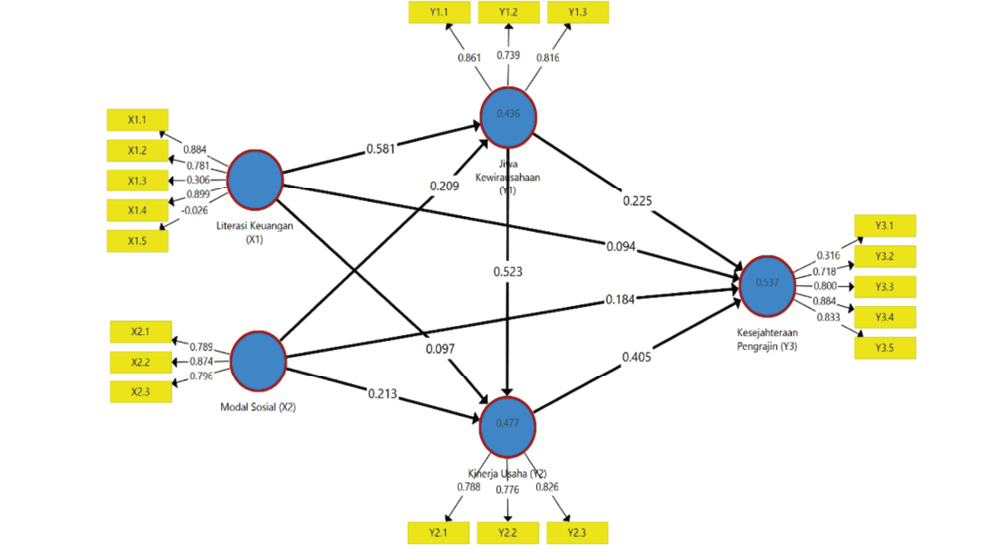
Figure 2. Empirical research model. Source: author’s calculations.
The research hypothesis referred to in Table 4 and Table 5 is as follows:
Table 4. Path Coefficients in Inner Model.
|
Relation |
Original Sample (O) |
Standard Deviation (STDEV) |
T Statistics (|O/STDEV|) |
P Values |
Significance |
|---|---|---|---|---|---|
|
X1 -> Y1 |
0.580 |
0.092 |
6.299 |
0.000 |
Significant |
|
X2 -> Y1 |
0.221 |
0.107 |
2.062 |
0.040 |
Significant |
|
X2 -> Y2 |
0.215 |
0.058 |
3.676 |
0.000 |
Significant |
|
X1 -> Y3 |
0.118 |
0.090 |
1.309 |
0.191 |
Insignificant |
|
X2 -> Y3 |
0.179 |
0.058 |
3.065 |
0.002 |
Significant |
|
Y1 -> Y2 |
0.522 |
0.082 |
6.334 |
0.000 |
Significant |
|
Y1 -> Y3 |
0.234 |
0.115 |
2.029 |
0.043 |
Significant |
|
Y2 -> Y3 |
0.361 |
0.108 |
3.358 |
0.001 |
Significant |
|
Relationship Between Variables |
Mediating Variable |
Original Sample (O) |
Standard Deviation (STDEV) |
T Statistics (|O/STDEV|) |
P Values |
Significance |
|---|---|---|---|---|---|---|
|
X1 -> Y2 |
Y1 |
0.302 |
0.086 |
3.512 |
0.000 |
Significant |
|
X2 -> Y2 |
Y1 |
0.115 |
0.050 |
2.294 |
0.022 |
Significant |
|
X1 -> Y3 |
Y1 |
0.135 |
0.074 |
1.831 |
0.068 |
Insignificant |
|
X2 -> Y3 |
Y1 |
0.052 |
0.034 |
1.516 |
0.130 |
Insignificant |
|
X1 -> Y3 |
Y2 |
0.036 |
0.032 |
1.113 |
0.266 |
Insignificant |
|
X2 -> Y3 |
Y2 |
0.078 |
0.034 |
2.308 |
0.021 |
Significant |
|
Y1 -> sY3 |
Y2 |
0.188 |
0.068 |
2.764 |
0.006 |
Significant |
4.1. The Influence of Financial Literacy and Social Capital on Entrepreneurial Spirit
The first hypothesis (H1) in this research states that financial literacy and social capital significantly affect the entrepreneurial spirit. The level of knowledge among business actors regarding financial literacy and their social capital directly impacts the entrepreneurial spirit of woven bamboo craft business actors in Tigawasa Village, Buleleng. The findings of this study align with the research conducted by Thomas and Subhashree (2020), which emphasized the positive impact of financial knowledge and social skills on fostering an entrepreneurial mindset. According to a study by Plakalović (2015), it was found that having a good understanding of finances, along with strong social connections, can enhance one’s entrepreneurial skills.
A recent study by Riepe et al. (2022) demonstrates that individuals with a strong understanding of financial literacy can enhance their business skills. In a recent study, Hasan et al. (2020) emphasized the significance of social capital for business professionals in enhancing their abilities. This statement reinforces the findings of this research by highlighting the significance of financial literacy and social capital in fostering an entrepreneurial spirit (Oggero et al., 2020). Efficient utilization of social capital in entrepreneurship can significantly accelerate the growth and development of businesses (Sara et al., 2021). Individuals with higher levels of human capital are more likely to identify appealing opportunities and take action toward starting their businesses, as opposed to those with lower levels of human capital (Barry et al., 2022; Matei et al., 2024). Social capital encompasses various aspects of social organizations, including trust, norms, and networks, which can enhance societal efficiency by promoting coordinated action (Auliah et al., 2022; Wang & Li, 2023).
4.2. The Influence of Financial Literacy, Social Capital and Entrepreneurial Spirit on Business Performance
The second hypothesis was supported, indicating that financial literacy, social capital, and entrepreneurial spirit strongly impact the business performance of bamboo woven artisans. The findings presented here align with the results of prior academic studies conducted by Arthur (2018), Kebede (2018), Schebesch et al. (2016), and Sulistyani and Suhariadi (2022). A recent study by Thomas and Subhashree (2020) revealed that the combination of social capital, financial knowledge, and entrepreneurial abilities can significantly enhance performance in the field of entrepreneurship. In a study conducted by Plakalović (2015), it was discovered that certain factors, such as financial literacy, the ability to manage social capital, and entrepreneurial talent, can positively impact business performance.
As highlighted by various academic studies, the entrepreneurial spirit is crucial in enhancing business performance (Oggero et al., 2020; Wang & Li, 2023). The entrepreneurial spirit encompasses a personality that values creative action, embraces challenges, exudes self-confidence, and possesses a strong sense of determination. It also involves managing risks, viewing change as an opportunity, and tolerating multiple choices. Individuals with an entrepreneurial spirit take initiative, strive for achievement, have a perfectionist streak, maintain an open mind, and value time considerably. These qualities are believed to enhance business performance, as supported by research (Ma, 2024; Vodă & Florea, 2019; Sariwulan et al., 2020).
4.3. The Influence of Financial Literacy, Social Capital, Entrepreneurial Spirit, and Business Performance on the Welfare of Bamboo Weaving Craftsmen
According to the research findings, the third hypothesis has been accepted. That implies that the welfare of bamboo woven artisans is influenced by financial literacy, social capital, entrepreneurial spirit, and business performance. The findings of this study align with the earlier work conducted by Kebede (2018), Lin et al. (2006), and Wu et al. (2020). According to Asante (2018), understanding financial literacy and enhancing business performance are crucial for enhancing the well-being of MSME players. Tajpour and Hosseini (2019) also noted that industrial players’ welfare level is influenced by social capital and individual entrepreneurial abilities. A recent study by Oggero et al. (2020) revealed that the welfare of entrepreneurs can be enhanced by factors such as financial literacy and social capital.
Welfare theory asserts that people’s overall well-being is determined by their capacity to seize business opportunities for income and effectively manage themselves to maintain productivity (Hustinx & De Waele, 2015; Stenkula, 2012). In this study, the researchers explore the relationship between factors such as financial literacy, social capital, entrepreneurial spirit, and business performance and how they contribute to the overall well-being of bamboo weaving crafts practitioners (Vial & Hanoteau, 2015). It is worth mentioning that welfare theory suggests that the satisfaction and overall welfare of MSME business actors can be enhanced by their success in entering international markets (Ma, 2024).
4.4. The Influence of Entrepreneurial Spirit Mediates the Influence of Financial Literacy and Social Capital on the Performance of Bamboo Weaving Craftsmen
According to the research, hypothesis four is supported, indicating that an entrepreneurial spirit, financial literacy, and social capital influence the performance of bamboo-woven artisans. These findings further validate the earlier study by Oggero et al. (2020). In the realm of MSME research, Hustinx and De Waele (2015) asserted that entrepreneurial ability is synonymous with an entrepreneurial spirit. There is a clear correlation between entrepreneurial ability and performance. On the other hand, additional studies have found a connection between financial literacy and social capital, which can indirectly impact entrepreneurial performance (Neumann, 2021). Additional research has discovered a connection between social capital, financial literacy, and micro, small, and medium enterprises (MSMEs) performance.
Meanwhile, the research findings support the welfare theory in the entrepreneurial context. They highlight the importance of self-management, including managing social capital and having good financial knowledge. Additionally, the findings emphasize the significance of entrepreneurial abilities and spirit for achieving maximum business performance.
The findings validate applying an entrepreneurial mindset influenced by financial literacy and social capital in bamboo woven craft businesses. When individuals prioritize their understanding of financial and social capital, they can significantly enhance their impact on fostering an entrepreneurial mindset (Wang et al., 2020). This study adds to the existing body of research on welfare theory by addressing recent findings and investigating the impact of resources on the performance of bamboo weaving craft practitioners (Sun & Liu, 2022). This study also has significant implications for management practice as it demonstrates the potential of financial literacy to enhance sustainability performance. Considering the social aspect, it becomes crucial for practitioners of bamboo woven crafts to emphasize concepts like sustainable community management, product innovation, cost-effective strategies, and the fusion of business and tourism. These factors significantly enhance the performance of bamboo woven craft businesses (Hasan et al., 2020; Oggero et al., 2020).
4.5. Entrepreneurial Spirit Mediates the Influence of Financial Literacy and Social Capital on the Welfare of Bamboo Weaving Craftsmen
Based on the findings of the hypothesis testing, it is evident that the fifth hypothesis lacks support. The study discovered that their entrepreneurial spirit did not influence the impact of financial literacy and social capital on the welfare of bamboo-woven artisans. This finding challenges the conclusions of earlier studies that suggested a link between financial literacy, social capital, and entrepreneurial spirit in determining prosperity (Sariwulan et al., 2020). Nevertheless, within the welfare context, it is believed that offering training alone is insufficient to encompass financial literacy’s intricacies, as argued by Auliah et al. (2022). Financial literacy encompasses various aspects such as training, management, investment, and productivity of business actors. It also involves providing incentives for environmental protection, as highlighted by several studies (Afandi et al., 2017; Plakalović, 2015; Thomas & Subhashree, 2020).
Regarding the well-being of artisans who create bamboo woven crafts, social power encompasses more than just an individual’s social skills. It also includes the capacity of business owners to run their businesses in harmony with the social environment. That involves taking on social responsibilities, protecting the environment, promoting recycling, utilizing natural materials, and actively collaborating with other businesses and tourism organizations (Afandi et al., 2017; Arthur, 2018; Wu et al., 2020). This situation is likely to affect the well-being of individuals. In addition, the welfare being discussed encompasses various aspects, such as the psychological well-being of individuals involved in business (Hasan et al., 2020). Successful entrepreneurs possess the necessary skills to effectively plan, organize, mobilize, and supervise their businesses to achieve their goals (Tajpour & Hosseini, 2019). This skill is essential for anyone aspiring to be a successful entrepreneur. Having a clear vision and strategic mindset is crucial for business success. As a business owner, you frequently encounter situations of unpredictability (Plakalović, 2015; Thomas & Subhashree, 2020). Often, a range of issues arise in situations of this nature. Successful entrepreneurs can carefully analyze situations and develop multiple solutions to problems (Henrekson & Roine, 2007; Tajpour & Hosseini, 2019; Wu et al., 2020).
Entrepreneurial competence has been found to enhance knowledge and skills in entrepreneurship, leading individuals to develop an interest in engaging in entrepreneurial activities. Moreover, positive psychological well-being can catalyze individuals to pursue independent living by harnessing their potential to start their businesses (Hustinx & De Waele, 2015; Stenkula, 2012; Vial & Hanoteau, 2015). Learning encompasses theoretical knowledge and practical skills, essential for individuals to excel in entrepreneurship. Academic sources (Henrekson, 2005; Neumann, 2021) support the idea that education equips individuals with the necessary abilities to effectively and efficiently pursue entrepreneurial endeavors.
The dismissal of this fifth hypothesis, though appearing conclusive, truly creates opportunities for critical qualitative analysis of the construct and methodology applied. The lack of support for the hypothesis from the data may suggest that the theoretical framework does not entirely capture the intricate realities present. The measured variables may fail to reflect the core of the phenomenon under investigation, or significant contextual factors or moderators might have been neglected in the initial mapping. Consequently, this dismissal is not a final obstacle, but instead a signal that our comprehension of the mechanisms linking the variables is still immature and needs additional thorough exploration.
Qualitative investigation after rejecting the hypothesis is essential for uncovering the “why” behind the absence of a statistical correlation. Qualitative methods, such as detailed interviews or participant observation, can reveal the reasoning and viewpoints of research participants that may not be easily visible in structured surveys. For instance, there could be social standards, worries, or regional understandings of the circumstance that lead participants to behave against theoretical expectations. Instead of seeing these findings as the conclusion of the investigation, they should be considered a chance for more detailed theory improvement. The qualitative results from this investigation can help improve operational definitions of variables, pinpoint boundary conditions where theories may or may not be valid, and potentially reframe hypotheses to be more robust and sensitive to context. This fosters a more dynamic research cycle—where quantitative techniques detect anomalies, while qualitative techniques elucidate them, ultimately resulting in the creation of more robust and thorough understanding
4.6. Business Performance Mediates the Influence of Financial Literacy, Social Capital, and Entrepreneurial Spirit on the Welfare of Bamboo Weaving Craftsmen
Based on empirical findings, it has been determined that the sixth hypothesis of this study is not supported. Bamboo artisans’ welfare in Buleleng Regency was not influenced by business performance, financial literacy, social capital, or entrepreneurial spirit. These findings challenge the existing research that suggests a link between financial literacy, social capital, entrepreneurial spirit, and well-being. Previous studies by Arthur (2018), and Wu et al. (2020) have suggested that these factors play a role in influencing performance. However, the results of this study contradict those claims (Henrekson & Roine, 2007). According to Shane and Nicolaou (2013), business performance significantly impacts the well-being of small and medium industries.
According to welfare theory, a positive relationship exists between business performance and welfare (Kebede, 2018). The success of small and medium businesses is closely tied to the performance of the business itself (Sulistyani & Suhariadi, 2022). In the realm of success, understanding money, building relationships, and having a drive to start businesses are all interconnected and cannot be overlooked. Having a solid understanding of financial literacy significantly impacts overall well-being, leading to the dismissal of any influence business performance may have (Afkhami Mostafavi et al., 2023; Lin et al., 2006). Success in academia does not solely rely on business performance. Business performance encompasses more than just financial figures; it encompasses the business’s overall performance (Wu et al., 2020).
The failure of conventional variables such as business performance, financial literacy, social capital, and entrepreneurial spirit to predict the well-being of bamboo craftsmen in Buleleng indicates that existing theoretical frameworks may not be fully appropriate or complete in capturing the unique socio-economic realities of this community. It is likely that the definition of well-being in this context goes beyond purely material-economic measures and is more related to subjective, cultural, or spiritual concepts of well-being that this study failed to measure. In other words, what the researcher defines as well-being may not align with how the craftsmen themselves define a good and meaningful life.
Qualitative exploration is key to uncovering the logic behind these seemingly counterintuitive findings. Through in-depth interviews and participant observation, we can delve into the craftsmen’s lifeworlds to understand why these economic variables are not the primary drivers. It is possible that within the close-knit bamboo craftsman community, redistribution mechanisms or a sharing economy exist that allow individual accumulation of business performance not to directly correlate with personal well-being, but rather to be enjoyed collectively. Furthermore, low financial literacy may be seen as normal or even offset by a strong informal financial system and family-based trust (a different form of social capital), thus neutralizing its impact on well-being. Their entrepreneurial spirit may not be driven by capital accumulation, but rather by preserving traditions and maintaining a sense of independence, which is already perceived as a form of well-being in itself.
Therefore, this finding is not a failure, but rather an invitation to revise and enrich the theory by incorporating more contextual, local perspectives. Future research should adopt an emic approach that allows the artisans’ own definition of well-being to emerge, perhaps encompassing elements such as cultural sustainability, self-esteem as guardians of tradition, stability in a simple lifestyle, and harmony within the community. New variables such as global market pressures on handicrafts, government intervention, or the role of the next generation in continuing the family business may become more significant determinants. Thus, this research paves the way for a more holistic and multidimensional understanding of well-being in the culture-based creative economy sector.
5. CONCLUSIONS
The welfare of bamboo woven artisans is influenced by financial literacy, social capital, entrepreneurial spirit, and business performance. One of the government’s key priorities in Indonesia is promoting financial literacy to enhance social welfare. Promoting financial literacy can contribute to the financial system’s stability and the community’s well-being, leading to inclusive development. The current understanding of social capital emphasizes the significance of relationships or networks in fostering trust, kinship, and solidarity, which impact overall well-being. The more driven individuals are in their pursuits, the more likely they are to persist and make progress. That contributes to enhancing the well-being of artisans. The contribution of MSMEs is crucial in addressing a wide range of economic challenges, such as fulfilling the demand for goods and services and tackling issues related to unemployment and employment.
Surprisingly, the study revealed that the entrepreneurial spirit did not play a role in connecting financial literacy and social capital to the welfare of bamboo-woven artisans. These findings go against prior studies. However, when discussing welfare, it is generally accepted that having a good understanding of financial matters is enough to indicate a state of prosperity. In the well-being of bamboo woven crafts practitioners, social capital encompasses more than just an individual’s social skills. It also involves the capacity of business actors to run businesses closely connected to the social environment effectively. It includes taking on social responsibility, protecting the environment, promoting recycling, utilizing natural materials, and actively collaborating with other businesses and tourism entities.
Similarly, business performance does not mediate the impact of financial literacy, social capital, and entrepreneurial spirit on the welfare of bamboo artisans in Buleleng Regency. Typically, financial literacy, social capital, and entrepreneurial spirit are closely intertwined. All three elements harmoniously contribute to the creation of prosperity. Financial literacy encompasses more than just understanding finance and risk. It also involves developing skills, motivation, and confidence to apply knowledge and make informed financial decisions effectively.
However, it is essential to note that this research has certain limitations. Specifically, the study focuses on a single region, meaning the results cannot be applied universally to other regions and countries. This research has opened up new possibilities for academic exploration by establishing a solid foundation. For this study, the author selected a group with similar characteristics. For a more comprehensive understanding of the subject in the future, we can conduct additional diverse research, including comparative studies. In theory, additional studies are needed to evaluate this model in a wider range of contexts and investigate other mediating factors. From a practical and managerial perspective, it is recommended that the government and empowerment organizations develop context-specific and comprehensive financial literacy training programs. While this research concentrated on a specific, restricted region (Tigawasa Village), rendering its findings not broadly applicable, it has created new avenues and established a strong base for additional scholarly inquiry. The authors have achieved internal consistency by choosing a group of participants with comparable traits. For a deeper understanding in the future, further diverse research, including comparative studies, is strongly suggested. In this context, it would be helpful to add brief comparisons with comparable artisan communities in different areas or nations to contextualize the results and enhance the analysis.
REFERENCES
., ., & . (2017). Social capital and entrepreneurial process. International Entrepreneurship and Management Journal, 13(3), 685–716.
., ., & . (2023). Examining the relationship between social capital and entrepreneurial spirit (Case of study: students of Ferdowsi and Medical Sciences Universities of Mashhad). Journal Of Economics and Regional Development, 29(24), 215–246
., 2016. Pengaruh literasi keuangan terhadap kinerja dan keberlangsungan UMKM di Jawa Tengah. Jurnal Siasat Bisnis, 20 (1), 1–13.
. (2018). Financial Literacy and Entrepreneurship Education: An Ethics for Capital or the Other? The Wiley Handbook of Global Educational Reform, pp. 435–465
. (2018). Strategic coethnicity: Social capital and entrepreneurial strategies of two Ghanaian migrant businesses. Journal of Enterprising Communities: People and Places in the Global Economy, 12(4), 418–436.
., ., ., ., & . (2022). The Role of Social Capital Facing Pandemic COVID-19 in Tourism Village to Support Sustainable Agriculture (Empirical Evidence from Two Tourism Villages in Indonesia). Economies, 10(12). https://doi.org/10.3390/economies10120320
., ., & . (2022). Great minds think alike, fools seldom differ: An empirical analysis of opportunity assessment in technology entrepreneurs. Sustainability (Switzerland), 14(1). https://doi.org/10.3390/su14010049
., ., & . (2024). Financial literacy of entrepreneurs and companies’ performance. Journal of Risk and Financial Management, 17(2), 63. https://doi.org/10.3390/jrfm17020063
., ., ., & . (2024). Financial Literacy: Identification of the Challenges, Needs, and Difficulties among Adults Living in Rural Areas. Agriculture (Switzerland), 14(10), 1–17. https://doi.org/10.3390/agriculture14101705
., ., ., ., ., .,... & . (2024). Trio of super-Earth candidates orbiting K-dwarf HD 48948: a new habitable zone candidate. Monthly Notices of the Royal Astronomical Society, 531(4), 4464-4481.
. (2001). Social capital, civil society and development. Third world quarterly, 22(1), 7-20.
. (2018). A positivist orientation: Hypothesis testing and the ‘scientific method.’ The SAGE encyclopedia of educational research, measurement, and evaluation, pp. 213–240.
., ., ., & . (2020). How do entrepreneurial literacy and financial literacy influence entrepreneurial intention from the perspective of economic education? Talent Development and Excellence, 12(1), 5569–5575.
. (2005). Entrepreneurship: A weak link in the welfare state? Industrial and Corporate Change, 14(3), 437–467.
., & . (2007). Promoting entrepreneurship in the welfare state. The Handbook of Research on Entrepreneurship Policy, 64–93.
., & . (2015). Managing hybridity in a changing welfare mix: Everyday practices in an entrepreneurial nonprofit in Belgium. VOLUNTAS: International Journal of Voluntary and Nonprofit Organizations, 26, 1666–1689.
, , , , & (2023). Analisis Keberlanjutan Kerajinan Bambu: Kajian Kesejahteraan dan Variabel Pendukungnya. Dalam Web Konferensi E3S (Vol. 440, hal. 07001). Ilmu EDP.
., ., & . (2022). How do you grab and determine the size of the sample for research? International Journal of Academic and Applied Research (IJAAR), 6(9), 88-92
., & . (2021). The role of entrepreneurial agility in digital entrepreneurship and creating value in response to digital disruption in the newspaper industry. Sustainability (Switzerland), 13(5), 1–26. https://doi.org/10.3390/su13052741
. (2018). Social capital and entrepreneurial outcomes: Evidence from informal sector entrepreneurs in Ethiopia. The Journal of Entrepreneurship, 27(2), 209–242.
., ., & . (2022). Design for poverty alleviation and craft revitalization in rural China from an actor-network perspective: the case of bamboo-weaving in Shengzhou. Heritage Science, 10, 1-16.
., ., & . (2006). Social capital, capabilities, and entrepreneurial strategies: a study of Taiwanese high-tech new ventures. Technological Forecasting and Social Change, 73(2), 168–181
. and ., (1996). Clarifying the Entrepreneurial Orientation Construct and Linking It to Performance. The Academy of Management Review, 21 (1), 135–172.
., ., & . (2010). Financial literacy among the young. Journal of Consumer Affairs, 44(2), 358–380.
. (2024). Entrepreneurs’ Spirit and Corporate Green Development: The Mediating Role of New-Quality Productivity. Sustainability (Switzerland), 16(17). https://doi.org/10.3390/su16177648
., ., & . (2024). Financial Perspectives on Human Capital: Building Sustainable HR Strategies. Sustainability (Switzerland), 16(4). https://doi.org/10.3390/su16041441
. (2010). Pengaruh faktor-faktor eksternal dan internal terhadap kinerja usaha mikro dan kecil (UMK) di Sulawesi Selatan. Jurnal manajemen dan kewirausahaan, 12 (1), 33–41
. (2021). The impact of entrepreneurship on economic, social and environmental welfare and its determinants: a systematic review. Management Review Quarterly, 71(3), 553–584.
., ., & . (2020). Entrepreneurial spirits in women and men. The role of financial literacy and digital skills. Small Business Economics, 55, 313–327.
., & . (2023). Performance and development challenges of micro–small bamboo enterprises in Gunungkidul, Indonesia. Advances in Bamboo Science, 4, 100037.
. (2015). Financial literacy of SMEs managers. Managing Intellectual Capital and Innovation for Sustainable and Inclusive Society, 409–416.
., ., & . (2022). Financial literacy and entrepreneurial risk aversion. Journal of Small Business Management, 60(2), 289-308.
., & . (2024, March). The welfare level of the bamboo artisan in Ampel District, Boyolali Regency, in 2022. In IOP Conference Series: Earth and Environmental Science (Vol. 1314, No. 1, p. 012131). IOP Publishing.
., ., & . (2021). Rural Assets Administration and Establishment of Village-Owned Enterprises for the Enhancement of Rural Economy. Jurnal Bina Praja, 13(1), 81–91. https://doi.org/https://doi.org/10.21787/ jbp.13.2021.81-91
., ., ., ., & . (2020). Entrepreneurial performance: The role of literacy and skills. The Journal of Asian Finance, Economics and Business, 7(11), 269–280.
., ., ., & . (2016). Fluorescein sodium-guided surgery of malignant brain tumors: history, current concepts, and future project. Turk Neurosurg, 26(2), 185-194.
., & . (2013). The genetics of entrepreneurial performance. International Small Business Journal, 31(5), 473–495.
. (2012). Taxation and entrepreneurship in a welfare state. Small Business Economics, 39, 77–97.
., & . (2009). Linking globalization of entrepreneurship in small organizations. Small Business Economics, 32, 233-239.
., & . (2022). Self-Efficacy as a Mediator of the Impact of Social Capital on Entrepreneurial Orientation: A Case of Dayak Ethnic Entrepreneurship. Sustainability, 14(9), 5620.
., & . (2022). How Design Technology Improves the Sustainability of Intangible Cultural Heritage Products: A Practical Study on Bamboo Basketry Craft. Sustainability (Switzerland), 14(19). https://doi.org/10.3390/su141912058
., & . (2019). The effect of human and social capital on entrepreneurial activities: A case study of Iran and implications. Entrepreneurship and Sustainability Issues, 6(3).
. (2010). Entrepreneurship and welfare. Small Business Economics, 34, 65–79.
., & . (2020). Factors that influence the financial literacy among engineering students. Procedia Computer Science, 172, 480–487.
., & . (2021). The impact of COVID-19 pandemic on stock market performance in Indonesia. The Journal of Asian Finance, Economics and Business (JAFEB), 8(5), 777-784.
., & . (2015). Returns to micro-entrepreneurship in an emerging economy: A quantile study of entrepreneurial Indonesian households’ welfare. World Development, 74, 142–157.
., & . (2019). Impact of personality traits and entrepreneurship education on entrepreneurial intentions of business and engineering students. Sustainability (Switzerland), 11(4). https://doi.org/10.3390/su11041192
., ., ., ., ., .,... & . (2020). Clinical characteristics of 138 hospitalized patients with 2019 novel coronavirus–infected pneumonia in Wuhan, China. jama, 323(11), 1061-1069.
., & . (2023). Innovation of Contemporary Chinese Urban Community Governance under the Perspective of Social Capital: Participation of Multiple Subjects Based on Community Proposals. Sustainability (Switzerland), 15(1). https://doi.org/10.3390/su15010093
., ., & . (2020). The effect of entrepreneurial social capital on dynamic capability: the moderating role of the entrepreneurial spirit. International Journal of Wireless and Mobile Computing, 19(4), 367–375.
., ., & . (2015). Bamboo and Balinese in Bangli: The local wisdom of Balinese in managing bamboo for sustainable bamboo forest and rural economic development. In Proceedings of the 10th World Bamboo Congress, Damyang, South Korea.