El impacto de las remesas en el crecimiento económico: un estudio comparativo entre Argelia, Marruecos, Túnez y Mauritania
The Impact of Remittances on Economic Growth: A Comparative Study Between Algeria, Morocco, Tunisia, and Mauritania
Daoudi Mohammed
University Centre of Maghnia (Algeria)
https://orcid.org/0009-0005-9835-7685
RESUMEN
Este estudio tiene como objetivo analizar el impacto de las remesas en las economías de Argelia, Marruecos, Túnez y Mauritania. Utilizando pruebas de cointegración (Pedroni, Kao y Johansen) y pruebas de causalidad, se evaluó la relación entre las remesas y el PIB en estos países durante el período 1975-2023. Los resultados mostraron una relación de cointegración entre las variables en todos los países, con distintos grados de beneficio derivados de las remesas. Mientras que Marruecos y Túnez se beneficiaron más de estas remesas debido a sus políticas económicas y relativa estabilidad política, Argelia y Mauritania enfrentaron desafíos estructurales que dificultaron el aprovechamiento pleno de estos fondos. Las pruebas de causalidad también revelaron una relación causal entre las remesas y el PIB en algunos países, lo que enfatiza la importancia de mejorar el entorno económico para canalizar estas remesas hacia inversiones productivas.
PALABRAS CLAVE
Remesas; Impacto económico; Cointegración; Causalidad económica; Crecimiento económico.
ABSTRACT
This study aims to analyze the impact of remittances on the economies of Algeria, Morocco, Tunisia, and Mauritania. By utilizing cointegration tests (Pedroni, Kao, and Johansen) and causality tests, the relationship between remittances and GDP in these countries was assessed over the period from 1975 to 2023. The results showed a cointegration relationship between the variables in all countries, with varying degrees of benefit derived from remittances. While Morocco and Tunisia benefited more from these remittances due to economic policies and relative political stability, Algeria and Mauritania faced structural challenges that hindered full utilization of these funds. The causality tests also revealed a causal relationship between remittances and GDP in some countries, emphasizing the importance of improving the economic environment to channel these remittances into productive investments.
KEYWORDS
Remittances; Economic Impact; Cointegration; Economic Causality; Economic Growth.
Clasificación JEL: F24, O11, O55, C33, F43.
MSC2010: 62P20.
1. INTRODUCTION
In today’s world, remittances from expatriates are considered one of the most significant economic factors contributing to improving the welfare of households and ensuring their financial stability. In some cases, they even influence the national economy in various ways, especially in developing countries, where these remittances represent an important source of foreign currency. The study of the impact of remittances on Gross Domestic Product (GDP) has garnered significant attention from researchers and economists, especially in light of contemporary global economic transformations. However, the relationship between remittances and economic growth remains a contentious issue, with differing opinions on whether these remittances genuinely influence local economic growth, or whether the relationship is weak or even non-existent.
This study aims to analyze the relationship between remittances (REMTS) and GDP in four Maghreb countries: Algeria, Morocco, Tunisia, and Mauritania. The central issue of this study is to determine whether remittances directly affect economic growth in these countries, and whether there is a causal relationship between the two variables, as well as whether domestic economic policies influence this relationship.
The first hypothesis suggests that there is a causal relationship between remittances and GDP in the four countries, with remittances leading to an increase in economic growth through stimulating local consumption and improving living standards. The second hypothesis posits that there is no clear causal relationship between remittances and GDP in these countries, with remittances not playing a significant role in stimulating long-term economic growth. The third hypothesis argues that the relationship between remittances and GDP may vary depending on the economic and social characteristics of each country, with the relationship potentially being stronger in some countries due to differences in economic policies, the volume of remittances, or the level of reliance on migrant labor.
The quantitative analysis methodology was used to assess the relationship between remittances and GDP in the four countries, employing a range of advanced statistical tests. The Pedroni Cointegration Test, Kao Cointegration Test, and Johansen Fisher Panel Cointegration Test. This study seeks to fill a significant gap in the economic literature concerning the impact of remittances on economic growth in the Maghreb region. Although the relationship between remittances and growth has been extensively investigated at the global and regional levels, comprehensive comparative analyses encompassing Algeria, Morocco, Tunisia, and Mauritania remain remarkably limited. Existing studies have predominantly concentrated on single-country cases or broader geographic groupings, thereby overlooking the nuanced variations in impact across economies that, while geographically and culturally proximate, differ considerably in their economic structures, institutional frameworks, and policy orientations.
In this context, the present research undertakes a comparative econometric analysis of the effects of remittances on economic growth in four Maghreb countries—Algeria, Morocco, Tunisia, and Mauritania. The selection of these countries is motivated by the pivotal role remittances play in their economies, whether in supporting the balance of payments, financing household consumption, or stimulating investment. Furthermore, their divergent levels of economic diversification, policy approaches, and institutional arrangements-combined with the political and economic transformations experienced over the past two decades-offer a compelling basis for comparative inquiry. By employing advanced econometric methodologies, the study aims to generate robust and credible empirical evidence, thereby providing policymakers with actionable insights for designing more effective strategies to optimize the growth-enhancing potential of remittances.
2. The Reality of Remittances in the Four Countries
The Maghreb countries exhibit significant disparities in the size of their diaspora communities and the value of remittances received from abroad. These differences reflect variations in economic policies, banking conditions, and the financial behavior of expatriates. When comparing Morocco, Algeria, Tunisia, and Mauritania, several important indicators emerge.
The number of Moroccans living abroad is estimated between 5.1 and 6.5 million people, while the Algerian diaspora is approximately 6.5 million. The Tunisian diaspora stands at around 1.3 million, and the Mauritanian community abroad is estimated at about 130,000 people. Despite the similar number of Algerians and Moroccans living abroad, the volume of remittances sent back home differs considerably. In 2023, remittances from Moroccans living abroad reached approximately 115.3 billion Moroccan dirhams (equivalent to USD 11.8 billion), representing around 8.2 % of Morocco’s GDP. In contrast, remittances to Algeria amounted to no more than USD 1.8 billion annually. In Tunisia, remittances reached about USD 2.2 billion, while in Mauritania, they did not exceed USD 100 million. (World Bank, 2023)
This significant disparity can be attributed to several factors, most notably the widespread presence of a parallel currency market-particularly in Algeria. A large gap exists between the official exchange rate and the black market rate, which drives many expatriates to use informal channels for transferring money. Instead of using official Algerian banking channels, many Algerians abroad prefer to send cash or rely on intermediaries to benefit from higher exchange rates, resulting in substantial losses of foreign currency that are not captured in official statistics.
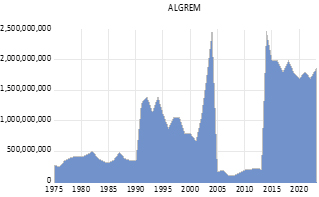
The Figure N°1 reflects the evolution of remittances to Algeria from 1975 to 2023, showing a gradual increase followed by notable spikes during times of crisis, especially in the 1990s and late 2000s. Remittances peaked around 2008 due to improved economic conditions and a growing number of migrants. After 2010, levels remained high but fluctuated due to internal and global crises. These remittances supported households, consumption, and small projects. Despite their importance as a source of foreign currency, they remain underutilized. Algeria needs more attractive policies to channel these funds toward investment and sustainable development.
Figure 1: Algeria remittances (1975-2023)
Source: World Bank Indicators
Conversely, banking policies and institutional openness in both Morocco and Tunisia have contributed to enhancing trust among expatriates and encouraging them to use formal transfer channels. These countries also offer clear incentives for investment and remittances, alongside a relatively narrow gap between official and parallel exchange rates-reducing the appeal of informal markets.
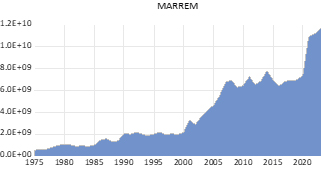
Remittances to Morocco showed steady growth from 1975 to 2023, starting at low levels and rising gradually due to increased migration to Europe. In the 2000s, remittances surged significantly thanks to better migrant conditions and improved banking channels. From 2010 onward, some fluctuations appeared, but a sharp rise occurred after 2019, especially due to the effects of the COVID-19 pandemic. These transfers supported families and boosted consumption and savings. They are a key source of foreign currency and strengthen the balance of payments. However, there is still a need to redirect them toward investment and production rather than just consumption (See Figure N°2).
Figure 2: Morocco remittances (1975-2023)
Source: World Bank Indicators
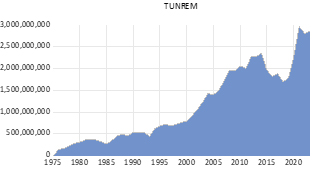
Remittances to Tunisia steadily increased from 1975 to 2020, with gradual growth during the 1990s and a sharp rise in the 2000s. They peaked in 2010 but declined slightly after the revolution due to instability. Starting in 2018, remittances surged again, reaching a second peak in 2020 due to the COVID-19 pandemic. These transfers supported consumption and eased social pressures. They are an important source of foreign currency, yet remain largely directed toward household spending. There is a need for stronger policies to channel them toward investment and economic development (See Figure N°3).
Figure 3: Tunisia remittances (1975-2023)
Source: World Bank Indicators
Based on the above, it can be concluded that improving remittance inflows is not solely dependent on the size of the diaspora, but more critically on the banking environment, the flexibility of monetary policy, and the level of trust expatriates have in state institutions. Therefore, any economic reform aimed at leveraging remittances must include a fundamental resolution of the parallel currency market issue and the enhancement of the local financial system’s efficiency.
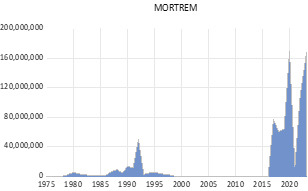
Figure 4: Mauritania remittances (1975-2023)
Source: World Bank Indicators
The Figure N°4 shows that remittances to Mauritania were very low between 1975 and 2000, with some slight and unsustained increases. After 2010, remittances began to rise significantly, with a notable acceleration after 2015. They reached their highest levels after 2020, surpassing 160 million. This growth is attributed to the expansion of the Mauritanian diaspora, improved financial infrastructure, and domestic economic conditions. These remittances have become an increasingly important source for the Mauritanian economy. They likely have a direct impact on consumption, poverty reduction, and the balance of payments.
3. Theoretical Approaches
The impact of remittances on economic growth has been a subject of extensive research, particularly in developing countries. Studies have shown that remittances can significantly contribute to economic growth by providing an alternative source of financing for investment and alleviating liquidity constraints. For example, (Fayissa & Nsiah, 2010) examined the effects of remittances on economic growth in 36 African countries from 1980 to 2004. Their findings indicated that remittances positively impacted economic growth, especially by helping to ease financing constraints, thereby fostering investment. This view was echoed by (Makhlouf & Naamane, 2013), who explored the effects of workers’ remittances on Morocco’s economic growth using the VAR model. Their study concluded that remittances had a positive effect on GDP per capita, with financial development acting as a channel through which remittances impacted growth.
Similarly, (Meyer & Shera, 2017) analyzed the effect of remittances on economic growth in six high remittance-receiving countries, including Albania, Bulgaria, Macedonia, Moldova, Romania, and Bosnia and Herzegovina, from 1999 to 2013. They found that remittances had a positive and growing impact on economic growth, particularly when remittance inflows increased relative to GDP. (Bucevska, 2022) also confirmed this positive relationship in South-East European countries, showing that remittances had a significant impact on economic growth, even surpassing Foreign Direct Investment (FDI) inflows. These findings underscore the critical role that remittances play in bridging the economic gap between developing countries and more advanced economies, particularly in the context of the European Union.
In Sub-Saharan Africa, (Perez-Saiz, Dridi, Gursoy, & Bari, 2019) employed a macroeconomic model with input-output sectoral linkages to examine the effects of remittances on the economy. They found that the impact of remittances on economic growth was amplified by the degree of linkages between sectors, with the financial intermediation sector being particularly sensitive to these changes. This suggests that the economic benefits of remittances are more pronounced in economies with strong intersectoral connections. On the other hand, (Nepal, Sae Woon, & Sunhae, 2020) studied the impact of remittances on 16 Asian developing countries, focusing on the role of institutional quality. They found that remittances positively affected economic growth, especially when institutional and financial development factors interacted with remittance inflows. Their study also highlighted that fragile economies benefited more from remittances, stressing the importance of strong institutions to channel remittances effectively into productive investments.
(Abdul-Malik, 2023) examined the long-term relationship between remittances and GDP growth in Ghana, discovering that remittance inflows, foreign direct investment, unemployment, inflation, trade, population growth, and official development assistance all played significant roles in shaping the country’s economic growth. The study also highlighted that unemployment mediated the negative effects of remittances on GDP growth, suggesting that better management of remittance flows could enhance Ghana’s economic performance. Similarly (Ait Benhamou & Cassin, 2021) employed an Overlapping Generations (OLG) model to analyze the demographic and economic effects of remittances in small open economies. They found that remittances boosted education but reduced domestic savings, leading to a negative correlation between the two. Their model predicted an inverted U-shaped relationship between remittances and economic growth, showing that different strategies for managing remittances could foster growth depending on migration and transfer rates.
Remittances have emerged as an important component of global capital flows, yet their relationship with economic growth remains insufficiently explored. Evidence suggests that the impact of remittances depends heavily on domestic financial sector development. (Giuliano & Ruiz-Arranz, 2009) find that in about 100 developing countries, remittances promote growth particularly in economies with underdeveloped financial systems by easing liquidity constraints and providing alternative investment financing. Their results are robust to various measures of financial development, endogeneity concerns, and threshold analysis, indicating that remittances can stimulate growth through an investment channel when credit access is limited.
In the Mexican context, (Rodríguez-Sánchez, 2023) reports no significant national-level impact on growth, though some poorer municipalities benefited when remittances were invested productively. When used mainly for basic consumption without improving education or health, remittances fail to foster long-term growth and may even deter development by reducing local investment incentives. The study highlights the risk of overdependence and calls for policies that strengthen education, health, financial inclusion, and job creation to ensure sustainable development.
For Latin America and the Caribbean, (Ramirez & Sharma, 2009) use panel unit root, cointegration tests, and FMOLS to reveal a long-run positive relationship between remittances and growth in both high- and low-income countries. Their findings also indicate that remittances and financial development act as substitutes, with remittances’ growth-enhancing effects more pronounced where financial systems are stronger.
Overall, these studies highlight the significant role that remittances play in promoting economic growth across various regions. The impact of remittances is influenced by factors such as financial development, institutional quality, and the structure of the economy. Effective management of remittances, especially through financial institutions and supportive policies, can help maximize their contribution to economic growth.
4. The applied framework of the study
In the applied section of this study, we will test the relationship between remittances and economic growth in the four countries over the period from 1975 to 2023, based on the availability of data obtained from the World Bank. The long-term relationship will be examined through the application of the Johansen Fisher Panel Cointegration Test, the Kao Cointegration Test, and the Pedroni Cointegration Test, while the short-term relationship will be assessed using the Granger Causality Test.
4.1. Long-run relationship analysis
4.1.1 Johansen Fisher Panel Cointegration Test
The cointegration test of Johansen (1988) makes it possible to calculate the number of co-integration relationships between the variables of the model by calculating the number of co-integration vectors. This test is based on the estimation of the following model:
Where the matrix Π it is formulated as follows:
: The number of lags in the model
: Matrix rank, which represents the number of co-integration relationships. From the eigenvalues of the matrix Π, we calculate the following to test the null hypothesis according to which there exist at most r co-integrating vectors (Johansen, 1988).
1; T: Sample size
Cointegration testing serves to identify whether GDP and remittances share a long-run equilibrium relationship. A finding of cointegration implies that the two variables move together over time despite short-term fluctuations, indicating a structural link within the economy and suggesting that remittances may contribute to sustainable growth rather than being merely temporary inflows. However, cointegration does not reveal the direction of influence, which requires further analysis through Granger causality testing within an Error Correction Model to distinguish between short- and long-run causality. While much of the literature examines the impact of remittances on growth, the reverse relationship is also plausible: rising GDP can encourage migrants to increase remittances for investment or consumption, enhance the attractiveness of the domestic economy for diaspora-led ventures, and stimulate flows toward productive projects in response to expanding economic opportunities.
Table 1: Unit root test ADF (Test of Stationary)
|
Decision |
1st difference |
Level |
V |
||||
|---|---|---|---|---|---|---|---|
|
None |
Trend & intercept |
Intercept |
None |
Trend & intercept |
Intercept |
||
|
I(1) |
141.164 (0.0000) |
100.607 (0.0000) |
91.4041 (0.0000) |
2.86712 (0.9424) |
6.54908 (0.5860) |
3.77386 (0.8769) |
REMTS |
|
I(1) |
–6.606 (0.0000) |
–6.351 (0.0000) |
–6.534 (0.0000) |
–1.627 (0.0970) |
–4.324 (0.1271) |
–4.358 (0.3012) |
GDP |
Source: Output from the EViews 13 program
The Augmented Dickey-Fuller (ADF) unit root test results presented in Table N°1 indicate that both variables, remittances (REMTS) and gross domestic product (GDP), are non-stationary at level under all specifications (none, intercept, and trend & intercept), as their p-values exceed the 5 % significance level. However, after taking the first difference, both series become stationary, with p-values of 0.0000 across all model specifications. This implies that REMTS and GDP are integrated of order one, I(1). Consequently, given their identical order of integration, it is appropriate to proceed with panel cointegration tests to investigate the existence of a potential long-run equilibrium relationship between the two variables.
Table 2: Johansen Fisher Panel Cointegration Test (Long run relationship)
|
Unrestricted Cointegration Rank Test (Trace and Maximum Eigenvalue) |
||||
|---|---|---|---|---|
|
Hypothesized No. of CE(s) |
Fisher Stat.* (from trace test) |
Prob. |
Fisher Stat.* (from max-eigen test) |
Prob. |
|
None |
61.00 |
0.0000 |
61.39 |
0.0000 |
|
At most 1 |
11.13 |
0.1947 |
11.13 |
0.1947 |
* Probabilities are computed using asymptotic Chi-square distribution.
Source: Output from the EViews 13 program
The results of the Johansen Fisher Panel Cointegration Test provide important insights into the long-run relationship between remittances (REMTS) and gross domestic product (GDP). The null hypothesis (H0) assumes that there is no cointegration between the two variables, while the alternative hypothesis (H1) suggests that there is at least one cointegrating relationship.
The panel results indicate strong evidence of cointegration. Under the “None” hypothesis (no cointegration), both the Fisher statistics from the Trace and Max-Eigen tests are highly significant, with values of 61.00 and 61.39 respectively, and corresponding p-values of 0.0000. These values are well below the 0.05 threshold, allowing us to reject the null hypothesis and conclude that at least one long-run relationship exists between remittances and GDP.
However, when testing the “At most 1” hypothesis, which examines the possibility of having only one cointegrating relationship, the Fisher statistics drop to 11.13 in both tests, with p-values of 0.1947. Since these values exceed 0.05, we cannot reject the null hypothesis in this case, indicating that there is likely only one cointegrating relationship, and no evidence of a second one. (Refer to Table N°2)
The individual cross-section results further support the panel findings. All countries studied show cointegration under the “None” hypothesis, with p-values below 0.05, confirming the presence of a long-run relationship in each case. When considering the “At most 1” hypothesis, only one country (Algeria) shows a potential second cointegrating relationship with a p-value of 0.0187, while the rest do not support this.
In conclusion, there is evidence of a single cointegrating relationship between remittances and GDP across the studied countries, suggesting a stable long-run connection between the two variables. This implies that changes in remittances may have a long-term impact on GDP. However, it is important to note that while cointegration implies a long-run association, it does not confirm causality between the variables. (Refer to Table N°3)
Table 3: Individual cross section results
|
Cross Section |
Trace Test Statistics |
Prob.** |
Max-Eign Test Statistics |
Prob.** |
|---|---|---|---|---|
|
Hypothesis of no cointegration |
||||
|
Algeria |
18.6634 |
0.0161 |
13.1310 |
0.0749 |
|
Morocco |
30.2892 |
0.0002 |
28.9710 |
0.0001 |
|
Tunisia |
21.6209 |
0.0053 |
21.5988 |
0.0029 |
|
Mauritania |
39.5621 |
0.0000 |
39.5544 |
0.0000 |
|
Hypothesis of at most 1 cointegration relationship |
||||
|
Algeria |
5.5324 |
0.0187 |
5.5324 |
0.0187 |
|
Morocco |
1.3181 |
0.2509 |
1.3181 |
0.2509 |
|
Tunisia |
0.0220 |
0.8819 |
0.0220 |
0.8819 |
|
Mauritania |
0.0077 |
0.9294 |
0.0077 |
0.9294 |
**MacKinnon-Haug-Michelis (1999) p-values
Source: Output from the EViews 13 program
4.1.2. Kao Cointegration Test
Kao proposes panel cointegration tests based on Dickey-Fuller (DF) and Augmented Dickey-Fuller (ADF) frameworks, assuming homogeneous cointegration vectors (i.e., different intercepts but common slopes) across individuals. The tests also assume a common long-run covariance matrix and do not account for heterogeneity under the alternative hypothesis. Additionally, they are not suitable for bivariate systems with only one regressor.
In large panels, Kao shows that residual-based tests are equivalent to unit root tests on residuals obtained from least squares dummy variable (LSDV) estimations. While the LSDV estimator is consistent, its t-statistic diverges. However, with proper normalization, the DF and ADF test statistics can follow a standard normal distribution asymptotically.
The starting point of the Kao tests is the following model:
where are the fixed effects varying across the cross-section observations, is the slope parameter common across , and are constant terms. Note that since both and are random walks, under the null hypothesis of no cointegration, the residual series should be non-stationary.
Kao assumes that
for all as where is a brownian motion vector with asymptotic covariance .
.Both tests proposed by Kao can be calculated from the estimated residuals of (eq1) specified as follows: (Kao, 1999)
Table 4: Kao Cointegration Test
|
Prob |
t-Statistic |
|
|---|---|---|
|
0.0005 |
3.298862 |
ADF |
|
– |
1.89E+17 |
Residual variance |
|
– |
2.08E+17 |
HAC variance |
Source: Output from the EViews 13 program
The results of the Kao Residual Cointegration Test provide further evidence on the long-run relationship between remittances (REMTS) and gross domestic product (GDP). The null hypothesis (H0) states that there is no cointegration between the two variables, while the alternative hypothesis (H1) assumes the existence of a cointegrating relationship. The test yielded an ADF statistic of 3.298862, with a corresponding p-value of 0.0005. Since the p-value is significantly lower than the conventional threshold of 0.05, we reject the null hypothesis. (Refer to Table N°4)
This result indicates that there is indeed a cointegrating relationship between remittances and GDP, suggesting that the two variables move together in the long run. In other words, fluctuations in remittances are associated with long-term movements in GDP, confirming the existence of a stable long-run equilibrium between them.
4.1.3 Pedroni cointegration Test
Pedroni (1999, 2004) proposed seven test statistics to examine the null hypothesis of no cointegration in nonstationary panel data. These statistics account for heterogeneity within the panel, allowing variations in both short-run dynamics and long-run slope and intercept coefficients. Unlike traditional time-series analysis, these tests do not require normalization or the precise determination of the number of cointegrating relationships. Instead, they assess the strength of evidence for or against the presence of cointegration among two or more variables in the panel. (Pedroni, Critical values for cointegration tests in heterogeneous panels withmultiple regressors, 1999)
The seven test statistics are classified into two categories: group-mean statistics, which average the results of individual country test statistics, and panel statistics, which pool the statistics along the within-dimension. Both categories include nonparametric tests (ρ and t) as well as parametric tests (augmented Dickey–Fuller [ADF] and v). (Baltagi, 2013)
To account for simple cross-sectional dependency, the test can incorporate common time dummies. This is achieved by time-demeaning the data for each individual and variable, as shown below:
All the test statistics are residual-based tests, with residuals collected from the following regressions:
where i = 1, 2,...,N is the number of individuals in the panel, t = 1, 2,..., T is the number of time periods, m = 1, 2,...,M is the number of regressors, and k = 1, 2,...,K is the number of lags in the ADF regression (selected automatically by xtpedroni with several available options). A linear time trend it can be inserted into the regression atthe user’s discretion. (Pedroni, 2004)
The results of the Pedroni Residual Cointegration Test provide insights into the long-run relationship between remittances (REMTS) and gross domestic product (GDP) across the selected countries. The null hypothesis (H0) assumes no cointegration between the variables, while the alternative hypothesis (H1) suggests the existence of a cointegrating relationship.
The test is divided into two main parts: within-dimension tests and between-dimension tests. In the within-dimension section, none of the statistics are significant. The panel v-statistic, panel rho-statistic, panel PP-statistic, and panel ADF-statistic all show high p-values, well above the 0.1 threshold, indicating a lack of statistical significance. Similarly, the between-dimension tests, including the group rho-statistic, group PP-statistic, and group ADF-statistic, also produce high p-values, further supporting the insignificance of the results. (Refer to Table N°5)
Table 5: Pedroni Cointegration Test (Long run relationship)
|
Alternative hypothesis: common AR coefs. (within-dimension) |
||||
|---|---|---|---|---|
|
Statistic |
Prob. |
Weighted Statistic |
Prob. |
|
|
–0.699761 |
0.7580 |
–1.058239 |
0.8550 |
Panel v-Statistic |
|
–0.811717 |
0.2085 |
1.913011 |
0.9721 |
Panel rho-Statistic |
|
–0.298316 |
0.3827 |
3.065675 |
0.9989 |
Panel PP-Statistic |
|
1.764096 |
0.9611 |
4.316078 |
1.0000 |
Panel ADF-Statistic |
|
Alternative hypothesis: individual AR coefs. (between-dimension) |
||||
|
Statistic |
Prob. |
|||
|
–0.750392 |
0.2265 |
Group rho-Statistic |
||
|
0.362080 |
0.6414 |
Group PP-Statistic |
||
|
3.001278 |
0.9987 |
Group ADF-Statistic |
||
Source: Output from the EViews 13 program
Given that all p-values are considerably high, we fail to reject the null hypothesis, which means there is no evidence of cointegration between remittances and GDP in the countries studied (Algeria, Morocco, Tunisia, and Mauritania). This suggests that changes in remittances may not have a long-term impact on GDP in these countries, or that the relationship between the two variables is not stable over time. (Refer to Table N°6).
Table 6: Cross section specific results
|
Phillips-Peron results (non-parametric) |
|||||
|---|---|---|---|---|---|
|
Obs |
AR(1) |
Variance |
HAC |
Bandwidth |
Cross ID |
|
48 |
0.533 |
2.52E+17 |
2.51E+17 |
1.00 |
Algeria |
|
48 |
0.421 |
1.32E+18 |
8.03E+17 |
1.00 |
Morocco |
|
48 |
0.434 |
2.52E+17 |
2.52E+17 |
0.00 |
Tunisia |
|
41 |
0.568 |
1.25E+15 |
1.42E+15 |
5.00 |
Mauritania |
|
Augmented Dickey-Fuller result (parametric) |
|||||
|
Obs |
AR(1) |
Variance |
Lag |
Max lag |
Cross ID |
|
47 |
0.700 |
2.57E+17 |
1 |
– |
Algeria |
|
47 |
1.048 |
1.10E+18 |
1 |
– |
Morocco |
|
47 |
0.890 |
2.18E+17 |
1 |
– |
Tunisia |
|
39 |
0.911 |
1.09E+15 |
1 |
– |
Mauritania |
Source: Output from the EViews 13 program
4.1.4 Impulse Response Functions (IRF)
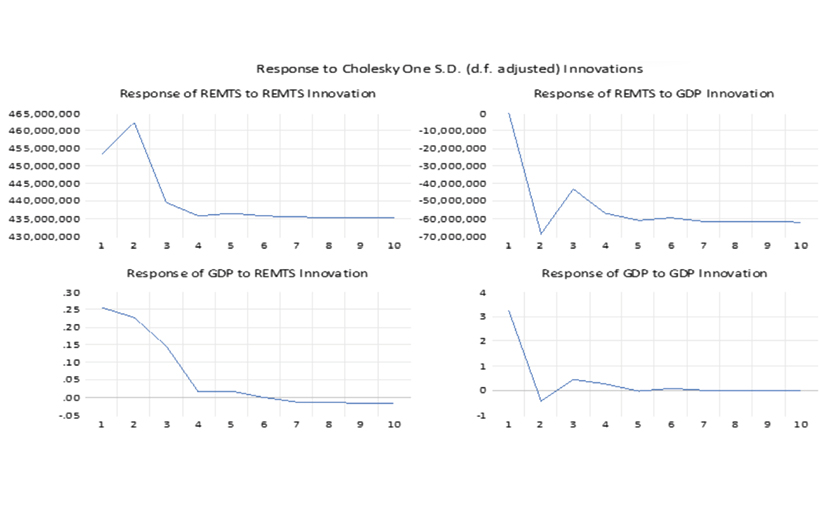
The analysis of the impulse response functions (IRFs) from the VECM, estimated using the Cholesky decomposition method, provides insights into the dynamic interactions between remittances (REMTS) and GDP over a ten-period horizon. A positive shock to remittances produces a modest initial increase in their own value, peaking around the second period, but this effect quickly diminishes and converges toward the baseline by approximately the fifth period, reflecting short-lived self-reinforcing dynamics. In contrast, a positive shock to GDP triggers an immediate decline in remittances, reaching its lowest point within the first period. Although there is a partial recovery, the effect remains negative and stabilizes after four to five periods, suggesting a potential inverse short-run relationship between domestic economic performance and remittance inflows.
The response of GDP to remittance shocks reveals a small, immediate positive effect, which gradually declines and turns slightly negative by the fourth period before converging to zero. This pattern implies that the growth stimulus from remittances is weak and short-lived. GDP’s own response to its shocks is strongly positive in the first period, but the magnitude decreases rapidly and stabilizes at a low positive level by the third period, reflecting the transitory nature of these effects.
Overall, the results indicate that the interactions between GDP and remittances are primarily short-term, with their respective impacts dissipating quickly over time. The negative short-run reaction of remittances to GDP shocks may suggest that improved domestic economic conditions reduce the reliance on foreign remittance inflows, while the limited and temporary contribution of remittances to GDP points to a lack of sustained growth-enhancing effects from these financial flows. (Refer to Figure N°5).
Figure 5: Impulse Response Functions (IRF)
Source: Output from the EViews 13 program
4.1.5 The variance decomposition analysis
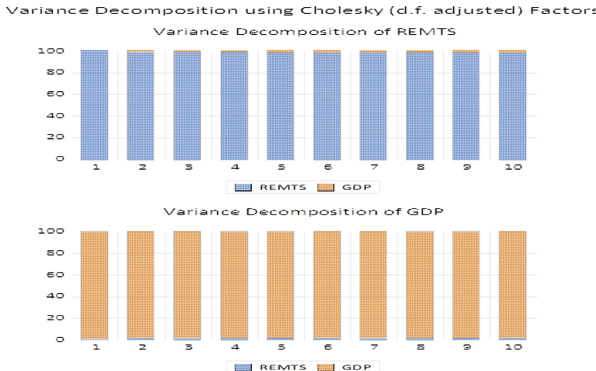
The variance decomposition analysis, based on the Cholesky method, illustrates the proportion of fluctuations in each variable that can be attributed to shocks in itself or in the other variable over multiple time periods. For remittances (REMTS), the results show that nearly 100 percent of their variance is explained by shocks to remittances themselves throughout all periods from one to ten. This indicates that variations in remittance flows are almost entirely independent of GDP shocks and are driven predominantly by internal factors or their own past dynamics over time.
Similarly, the variance decomposition of GDP reveals that almost 100 percent of its variance is accounted for by shocks to GDP itself across all periods, with remittance shocks having only a negligible effect. This finding suggests that, within the model, GDP is shaped primarily by its own internal economic dynamics rather than being influenced in any significant way by remittance inflows. (Refer to Figure N°6).
Figure 6: The variance decomposition analysis
Source: Output from the EViews 13 program
4.1.6 General Interpretation of Cointegration Tests (Combined Results for the Four Countries)
The results of the cointegration tests provide insights into the long-run relationship between remittances (REMTS) and gross domestic product (GDP) in Algeria, Morocco, Tunisia, and Mauritania. The Pedroni test indicated no cointegration between remittances and GDP in most cases. This suggests that there is no stable, long-term relationship between these two variables in the four countries.
Economically, this can be interpreted as remittances not being a strong long-term driver of local economies. While remittances may have a temporary impact at times, they do not serve as a strategic catalyst for sustainable economic growth. External factors, such as economic policies in the countries of emigration, may play a more significant role in influencing remittances than domestic factors like economic performance or local policies.
On the other hand, the Kao test results showed evidence of cointegration between remittances and GDP, indicating a stable long-term relationship between the two variables in the four countries. This suggests that remittances could be considered a long-term factor influencing economic growth in these nations. The cointegration implies that remittances may consistently contribute to the stability of the local economy, affecting consumer spending, stimulating investments, and improving living standards.
The Johansen test results revealed cointegration in some countries, like Morocco, while other countries, such as Algeria, showed no such relationship. When cointegration is present, as in Morocco, it suggests that remittances play a role in the long-term economic stability and could be a supporting factor for economic growth, especially in countries that rely on remittances as a significant source of income. However, in countries where no cointegration was found, other economic factors, such as local economic policies or global economic crises, are likely the primary drivers of economic growth, rather than remittances.
4.1.7 The interpretation specific to each country
Algeria: The results of the Pedroni and Johansen cointegration tests showed no evidence of a long-term relationship between remittances and GDP in Algeria. However, the Kao test suggested the presence of cointegration, indicating that remittances could potentially affect economic growth in the long run.
Economically, remittances in Algeria may be more influenced by external factors, such as the political and economic stability in the countries receiving the remittances, rather than being strongly linked to the local economy. Remittances might not have a substantial continuous effect on economic growth, but they may contribute to financial stability for the households receiving them, without directly impacting the national economy.
Morocco: The Pedroni and Kao tests indicated no cointegration between remittances and GDP in Morocco. However, the Johansen test revealed the existence of a long-term relationship, suggesting that remittances have a significant long-term impact on the Moroccan economy.
In Morocco, remittances may contribute more to economic stability in the long term, as they support consumer spending, boost domestic demand, and stimulate some economic sectors. While remittances can act as a driver for growth at times, they are not considered the primary factor sustaining economic growth in Morocco.
Tunisia: The Pedroni and Kao tests showed no cointegration between remittances and GDP in Tunisia. The Johansen test, while indicating the potential for cointegration, did not provide enough evidence to confirm the relationship.
Remittances in Tunisia may have a temporary or limited impact on the economy. There is no strong evidence that these remittances form a sustainable factor for economic growth. Although remittances help improve the purchasing power of households, they do not significantly contribute to the overall economic growth.
Mauritania: The results of the Pedroni and Kao tests showed no cointegration between remittances and GDP in Mauritania, and the Johansen test also indicated no long-term relationship, suggesting that remittances and economic growth are independent in Mauritania.
Economically, remittances in Mauritania may have an indirect effect on the welfare of households, but they do not directly influence national economic growth. Remittances likely affect household consumption, but they do not serve as a fundamental pillar for economic growth, as they might in other countries.
4.2. Analysis of the short-term relationship
4.2.1. The Granger Causality Test:
Theoretically, demonstrating the causal relationships between economic variables helps explain economic phenomena in a clear and effective manner, thereby aiding the implementation of economic policies. Moreover, the direction of the causal relationship between economic variables provides a better understanding of the economic phenomenon under study. Granger introduced concepts of causality and exogeneity, explaining them as follows: a variable causes a change in another variable if the predictability of the latter’s evolution improves when information or data from the former is included in the analysis.
The composition of the variables ,
,....., is considered external to the composition of the variables ,
...., if the increase in the combination does not significantly improve the identification of the variables. This requires a test of constraint parameter variables to be VAR (to become RVAR: Restricted VAR). Determination of delay or delay periods p is based on the AIC and SC criteria where if: It does not cause if the next nihilistic hypothesis is acceptable
It does not cause if the next nihilistic hypothesis is acceptable
If we come to accept the two nihilistic assumptions together, that is, cause and cause, in the case of what is known as the effect feedback loop. The Granger Causality Test is used to confirm the extent to which there is a feedback or reciprocal relationship between two variables. (Granger, 1969).
Table 7: Granger Causality Test (Short run relationship)
|
Null Hypothesis |
Obs |
F-Statistic |
Prob. |
|---|---|---|---|
|
GDP does not Granger Cause REMTS |
180 |
2.41624 |
0.0922 |
|
REMTS does not Granger Cause GDP |
180 |
0.66510 |
0.5155 |
Source: Output from the EViews 13 program
For each causal relationship, there are two hypotheses that need to be tested. The first hypothesis is that GDP does not cause remittances, and the second hypothesis is that remittances do not cause GDP. The results of the Granger causality test show that there is no significant causality from remittances to GDP, as the p-value is 0.5155, indicating that we cannot reject the null hypothesis. However, there is a suggestion that GDP might cause remittances at a 10 % significance level, with a p-value of 0.0922, which is close to being statistically significant but not conclusive at the 5 % level. (Refer to Table N°7)
In conclusion, the results indicate that remittances do not cause GDP, but GDP might have a potential influence on remittances, albeit at a weak level of significance.
4.2.2 Granger Block Test causality
The results of the VEC Granger causality/Block Exogeneity Wald tests presented in Table reveal that, in the short run, there is no statistically significant causal relationship between remittances (REMTS) and gross domestic product (GDP) in either direction. Specifically, changes in GDP do not Granger-cause changes in REMTS (p-value = 0.8313), and changes in REMTS do not Granger-cause changes in GDP (p-value = 0.4344). These findings suggest the absence of short-run predictive power between the two variables. Nevertheless, this result does not preclude the existence of a long-run equilibrium relationship between REMTS and GDP, as indicated by the cointegration analysis, which is captured through the error correction term in the VECM framework. (Refer to Table N°8).
Table 8: Granger Block Test causality:
|
Dependent variable: D(REMTS) |
|||
|---|---|---|---|
|
Excluded |
Chi-sq |
df |
Prob. |
|
D(GDP) |
0.369613 |
2 |
0.8313 |
|
All |
0.369613 |
2 |
0.8313 |
|
Dependent variable: D(GDP) |
|||
|
Excluded |
Chi-sq |
df |
Prob. |
|
D(REMTS) |
1.667719 |
2 |
0.4344 |
|
All |
1.667719 |
2 |
0.4344 |
Source: Output from the EViews 13 program
4.2.3 General Interpretation of Granger Causality Test (Four Countries Combined):
The Pairwise Granger Causality Test results show no strong causal relationship between remittances (REMTS) and GDP across the four countries. The test indicated that GDP does not cause remittances, and remittances do not cause economic growth. Statistically, there was no significant causal relationship between the two variables, suggesting that financial remittances may not be the main driver of economic growth in these countries.
Economically, this implies that remittances do not have a direct and sustained impact on GDP and are not a key element for achieving sustainable economic growth in the four countries. Similarly, GDP does not seem to have a significant effect on remittance flows, meaning that economic growth might not lead to a noticeable increase in remittance volumes. This suggests that the relationship between GDP and remittances could be more impactful during certain periods or may depend on other factors, such as economic policies or social conditions in the countries of origin.
4.2.4 Interpretation for Each Country:
Algeria: The Granger causality test results showed that GDP does not cause remittances, and remittances do not significantly affect economic growth in Algeria. Economically, remittances in Algeria may act as a short-term enabler for increased local consumption but are not considered a long-term driver of economic growth. Remittances are less influenced by local economic performance and may depend more on external policies and economic conditions in the countries sending remittances. Economic growth in Algeria seems to be more influenced by other factors, such as the oil sector and fiscal policies, rather than being closely tied to remittances.
Morocco: The results in Morocco showed that remittances do not cause economic growth, and GDP does not cause an increase in remittances. Economically, remittances may contribute to improving the living standards of households, but they do not significantly affect national economic growth. This suggests that remittances primarily act as a consumption factor, improving the well-being of individuals and families in Morocco, but they do not serve as a long-term economic driver. Economic growth in Morocco is likely driven by other sources, such as exports, tourism, or domestic investments, rather than being directly linked to remittances.
Tunisia: The results in Tunisia indicated that remittances do not influence GDP, and GDP does not cause remittances. The relationship between GDP and remittances in Tunisia seems inconclusive in the long term. While remittances help achieve financial stability for households, they are not a primary driver of economic growth, and economic growth does not appear to lead to a significant increase in remittances. This suggests that local economic trends may have less impact on the decisions of migrants to send money to Tunisia.
Mauritania: The results in Mauritania showed that remittances do not influence GDP, and GDP does not cause an increase in remittances.
5. Conclusion
Based on the analysis conducted, it is evident that the relationship between remittances and Gross Domestic Product (GDP) in the four countries under study (Algeria, Morocco, Tunisia, and Mauritania) reflects complex effects that vary across these countries according to different economic and social contexts. Through the implementation of cointegration tests and causality tests, it can be concluded that there is a long-term cointegrated relationship between the two variables in most of the countries under study, which is consistent with many previous studies that have shown that remittances contribute to enhancing economic growth in developing countries.
Regarding the main issue raised by the study about the impact of remittances on GDP in these countries, the findings conclude that remittances are an important source of support for the local economy in most cases. However, the effect of these remittances differs from one country to another based on several factors, such as the size of the economy, economic stability, and the economic policies in place.
As for the hypotheses, the first hypothesis, which assumes a positive relationship between remittances and economic growth, has largely been validated, as the results showed a long-term cointegrated relationship between remittances and GDP in most countries, particularly in Morocco and Tunisia. The second hypothesis, which assumes that the impact of remittances on the economy differs between countries based on the local economic context, has also been validated. The results showed that the impact in Algeria and Mauritania was less pronounced compared to Morocco and Tunisia, which aligns with previous studies indicating differences in the utilization of remittances between developing countries.
Recommendations include improving economic policies in countries like Algeria and Mauritania, which have not shown significant benefits from remittances, by focusing on attracting both local and foreign investments, and regulating remittance flows more effectively. Enhancing investment in local projects by directing remittances towards small and medium-sized enterprises could help stimulate economic growth more effectively in countries facing structural economic issues. Additionally, establishing a legal and regulatory framework that enhances the direction and stimulation of remittances towards productive sectors can have a significant impact on achieving sustainable economic growth.
The findings of this research align with many previous studies that confirmed remittances are an essential tool for stimulating economic growth in developing countries, but with varying degrees of impact across different countries. Some studies have shown that countries facing economic imbalances or heavy reliance on natural resources may be less able to invest these remittances effectively, as is the case in Algeria and Mauritania.
In conclusion, this study highlights the importance of remittances as a central factor in stimulating economic growth. However, the impact varies according to each country’s economic and social context. While some countries show significant benefits from remittances, others require economic reforms to maximize their potential.
REFERENCES
. (2023). The impact of remittances on economic growth in Ghana: An ARDL bound test approach. Cogent Economics & Finance, 11(2), pp. 1-14.
., & . (2021). The impact of remittances on savings, capital and economic growth in small emerging countries. Economic Modelling, 94, pp. 789-803.
. (2013). Econometric Analysis of Panel Data (éd. 5th ed). New York: Wiley.
. (2022). Impact of remittances on economic growth: Empirical evidence from South-East Euroepean countries. South East European Journal of Economics and Business, 17(1), pp. 79-94.
., & . (2010). The impact of remittances on economic growth and development in Africa. The American Economist, 55(2), pp. 92-103.
. & . (2009). Remittances, financial development, and growth. Journal of Development Economics, 90(1), pp. 144-152.
. (1969). Investigating Causal Relations by Econometric Models and Cross-spectral Methods. Econometrica, 37(3), pp. 424-438.
. (1988). Statistical analysis of cointegration vectors. Journal of Economic Dynamics and Control 12, pp. 54-231.
. (1999). Spurious Regression and Residual-Based Tests for Cointegration in Panel Data. Journal of Econometrics, 90(1), pp. 1-44.
., & . (2013). The Impact of Remittances on Economic Growth: The Evidence from Morocco. HAL Open science, (pp. 1-17).
., & . (2017). The impact of remittances on economic growth: An econometric model. EconomiA, 18(2), pp. 147-155.
., ., & . (2020). Impact of remittances on economic performance in consideration of institutional quality: Evidence from Asian developing economies. Journal of economic studies, 47(3), pp. 479-507.
. (1999). Critical values for cointegration tests in heterogeneous panels withmultiple regressors. Oxford Bulletin of Economics and Statistics, 61(1), pp. 653–670.
. (2004). Panel cointegration: Asymptotic and finite sample properties of pooledtime series tests with an applicaton to the PPP hypothesis. Econometric Theory, 20(1), pp. 597–625.
., ., ., & . (2019). The Impact of Remittances on Economic Activity: The Importance of Sectoral Linkages. IMF working paper (pp. 1-38). Washington: IMF.
., & . (2009). Remittances and Growth in Latin America: A Panel Unit Root and Panel Cointegration Analysis. Estudios Economicos de Desarrollo Internacional, 9(1), pp. 5-36.
. (2023). An Economic Lifeline? How Remittances From the US Impact Mexico’s Economy. Baker Institute for public policy.
. (2023). World Bank Reports on Migration and Development.